Showing posts with label Glyphosate. Show all posts

Saturday, May 24, 2014

Study: Glyphosate Doubles Risk Of Lymphoma


by: Emily Cassidy, Biofuels Research Analyst

Scientists at the International Agency for Research on Cancer have found what appears to be a strong link between pesticide exposure and a blood cancer called non-Hodgkin lymphoma.

Analyzing 44 individual research projects published since 1980, the scientists, writing in the International Journal of Environmental Research and Public Health, said that people exposed to the weed killer glyphosate, marked by Monsanto under the brand name Roundup, had double the risk of developing non-Hodgkin’s lymphoma.

Those exposed to 2,4-D, another potent weed killer marketed by Dow Chemical, were 40 percent more likely to develop this disease.

The authors, scientists who work in the IARC Section of Environment and Radiation in Lyon, France, theorized that these pesticides were causing genetic mutations in white blood cells, thereby weakening the body’s immune system and ability to fight off disease.

Previous studies have observed that farmers with exposure to 2,4-D have experienced impaired immune systems.

Last month, EWG reported that research by scientists at the Arctic University of Norway had detected “extreme levels” of glyphosate on genetically engineered soybeans.

Crop scientists have genetically engineered soy to survive blasts of glyphosate so that farmers can use this chemical to get rid of weeds near crops. Over time these weeds have become resistant to glyphosate and grown hardier. In turn some farmers have resorted to spraying more of the pesticide to try to kill the tougher “super weeds”.

Genetic engineering’s early promise to reduce pesticide use now seems empty. The U.S. Department of
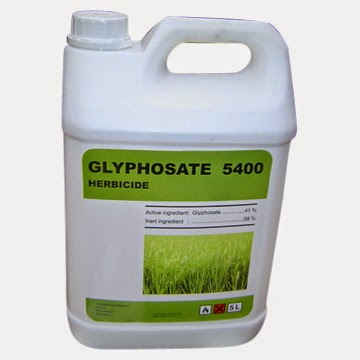
Agriculture recently reported that herbicide use doubled—from 62 million pounds in 1996 to 128 million pounds in 2012. Glyphosate now represents more than 83 percent of the chemical pesticides used in the U.S. annually.

The IARC study was published April 23, as the U.S. Environmental Protection Agency was considering approving GE seeds of corn and soybeans engineered to withstand 2,4-D, a suspected carcinogen. If the EPA approves the new GE seeds and if 2,4-D is used to kill weeds on some of the 170 million acres of corn and soybeans grown in the U.S. annually, the USDA estimates that 2,4-D use is likely to triple, dramatically increasing people’s exposure to a pesticide that may cause cancer.

How can consumers reduce their exposures to these pesticides? When we eat GE foods, we are taking a dose of pesticides with them. Right now, we can’t tell which foods are genetically engineered. We have to guess. EWG believes people the right to know which foods are genetically engineered. What can you do? Tell your elected representatives to support legislation to label GE foods.

source: EWG


Please refer to the Food Additives Bible application for information about full list of dangerous colors, flavor enhancers, preservatives, emulsifiers, sweeteners, stabilizers, gelling agents and thickeners>

Opera Mobile Store

Google-Play-crno

key words: food, health, cancer, Lymphoma, Glyphosate, wellness 

Tuesday, May 20, 2014

“Extreme” Levels of Roundup Detected in Food

“Extreme” Levels of Roundup Detected in Food—Are You Eating This Toxic Contaminant?


By Dr. Mercola
In 2009, a French court found Monsanto guilty of lying; falsely advertising its Roundup herbicide as "biodegradable," "environmentally friendly" and claiming it "left the soil clean."

We're now starting to understand just how false such statements are. For example, last summer, a groundbreaking study revealed a previously unknown mechanism of harm from glyphosate, the active ingredient in Roundup.

The research showed that glyphosate residues, found in most processed foods in the Western diet courtesy of GE sugar beets, corn, and soy, "enhance the damaging effects of other food-borne chemical residues and toxins in the environment to disrupt normal body functions and induce disease."

More recently, a Norwegian study published in Food Technology1 found that genetically engineered (GE) soy contains high levels of glyphosate, along with a poorer nutritional profile, leading the researchers to question its quality and safety.

Evidence also suggests glyphosate may be a key player in Argentina's growing health problems, where birth defects and cancer rates have skyrocketed among GE corn and soya farming communities.

If You Eat Processed Food, You're Eating Glyphosate

While nearly one billion pounds of glyphosate is doused on both conventional and GE crops worldwide each year, GE crops receive the heaviest amounts. It's important to realize that processed foods undoubtedly expose you to this toxic contamination, courtesy of the soy and vegetable oil used.2

Ditto for meats from animals raised in confined animal feeding operations (CAFOs), as soy is a staple of conventional livestock feed. As noted in the featured article by Rodale News:3
"That herbicide-laced soy winds up in thousands of nonorganic packaged foods and in animal feed for livestock like pigs, cows, chickens, and turkeys.

Why is this happening? Genetically engineered crops are manipulated in a way that could never occur in nature so plants like corn, soy, canola, cotton, and sugar beets can withstand high doses of glyphosate-containing herbicides that would normally kill them. The result? Roundup in food that people and farm animals eat."

Beware: Glyphosate Is a Systemic Contaminant

It's quite crucial to understand that glyphosate contamination is systemic, meaning it is present in every cell of the plant, from root to tip. It's not just an issue of topical contamination, as with many other agricultural chemicals sprayed on crops.

Normally, you need to thoroughly wash your produce to remove topical residues, but you simply cannot remove glyphosate from your produce. And neither can food and animal feed manufacturers who use GE ingredients in their products.

This is a major reason for avoiding processed foods, over and beyond the fact that processed foods are less healthy for you from a nutritional standpoint.

Making matters worse, while evidence is piling up showing the hazards of glyphosate on human health, farmers are ramping up their usage of the chemical due to the proliferation of resistant weeds, and the Environmental Protection Agency (EPA) recently raised the allowable levels of glyphosate in food by significant amounts.4, 5

Allowable levels in oilseed crops such as soy were doubled, from 20 ppm to 40 ppm just lasts summer. It also raised the levels of permissible glyphosate contamination in other foods—many of which were raised to 15-25 times previous levels.

GE Soy Is NOT 'Substantially Equivalent' to Non-GE Soy, Researchers Say


The Norwegian study in question investigated contamination levels and nutritional contents of three varieties of Iowa-grown soybeans:6 Roundup Ready soybeans; non-GE, conventional soybeans grown using Roundup herbicide; and organic soybeans, grown without agricultural chemicals.

On average GE soy contained 11.9 parts per million (ppm) of glyphosate. The highest residue level found was 20.1 ppm. Meanwhile, no residues of either kind were found in the conventional non-GE and organic varieties. (Similar results were found in a 2012 nutritional analysis of GE corn, which was found to contain 13 ppm of glyphosate, compared to none in non-GMO corn.)

Such revelations have serious implications for Americans who eat an average of 193 pounds of genetically engineered foods each year.7 In an article for The Ecologist,8 two of the researchers point out that these levels are actually double, or more, of what Monsanto itself has referred to as "extreme levels:"

"All of the individual samples of GM-soy contained residues of both glyphosate and AMPA, on average 9.0 mg/kg. This amount is greater than is typical for many vitamins.

Monsanto (manufacturer of glyphosate) has claimed that residues of glyphosate in GM soy are lower than in conventional soybeans, where glyphosate residues have been measured up to 16-17 mg/kg (Monsanto 1999).

These residues, found in non-GM plants, likely must have been due to the practice of spraying before harvest (for desiccation).

Another claim of Monsanto's has been that residue levels of up to 5.6 mg/kg in GM-soy represent '...extreme levels, and far higher than those typically found.' (Monsanto 1999).
" [Emphasised by Dr. Mercola]

The researchers also found nutritional differences between the three types of soy. Compared to conventionally grown non-GE and GE soy, organic soybeans contained higher levels of protein and zinc, and lower levels of omega-6. According to the authors:9 "This study rejects that GM soy is 'substantially equivalent' to non-GM soybeans."
source: Dr. Mercola

Please refer to the Food Additives Bible application for information about full list of dangerous colors, flavor enhancers, preservatives, emulsifiers, sweeteners, stabilizers, gelling agents and thickeners>
Opera Mobile StoreGoogle-Play-crno